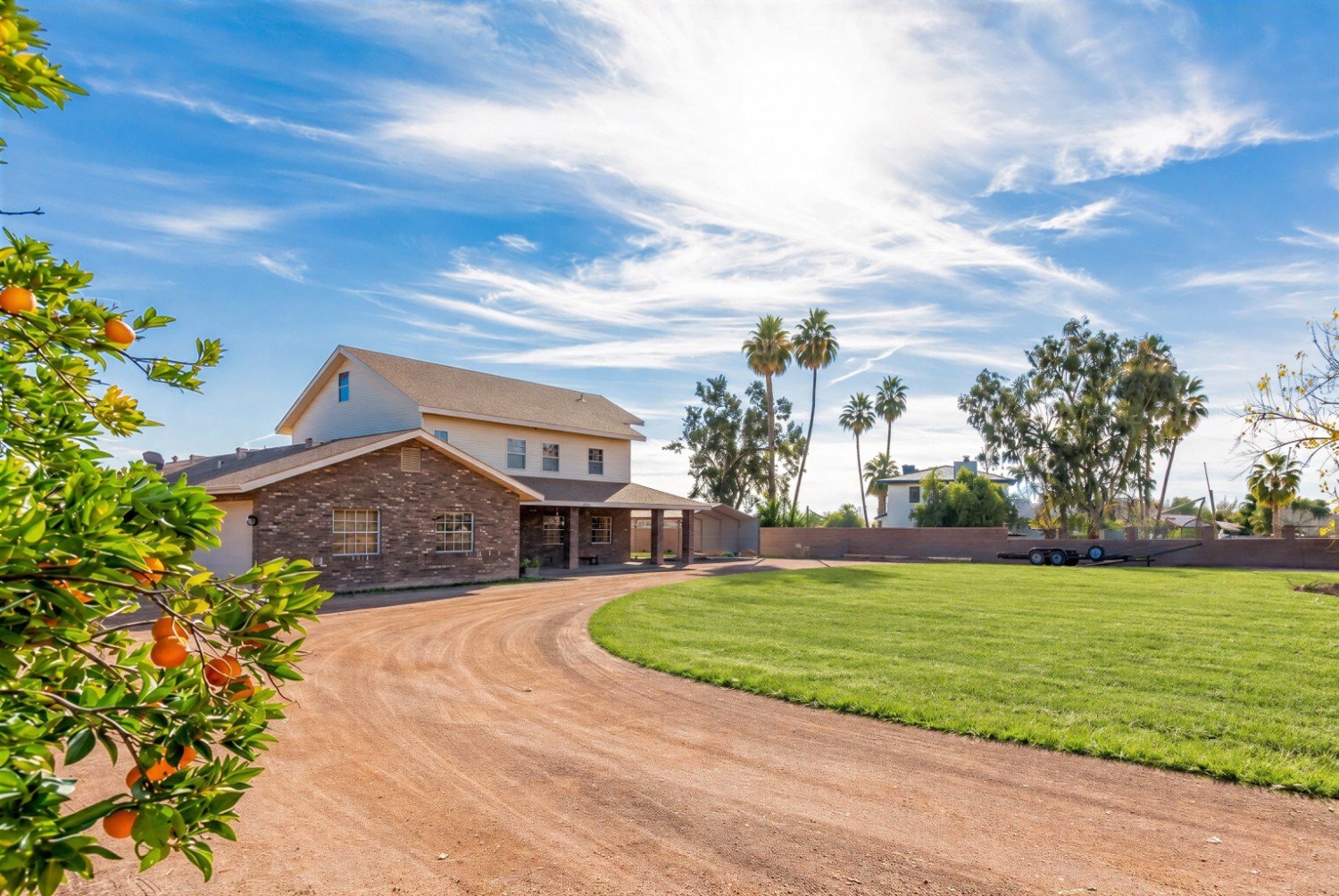
What should buyers verify before making an offer on a Waddell horse property?
Verify the parcel's zoning first, then check that zoning against your exact plan for horses, then confirm usable space, access, water rights & fencing. Acreage alone doesn't establish horse use rights, and Maricopa County advises buyers to confirm a property's specific restrictions with Planning & Development before proceeding.
Key Takeaways
Maricopa County assigns every parcel a zoning or land-use designation, so acreage and listing wording never settle whether your horses are allowed.
County rules for corrals generally call for a rear-yard location, a 40-foot setback from lot lines, and at least 1,200 square feet per horse.
Boarding, training, breeding, and lessons are treated as a separate commercial category from keeping your own horses, so get written confirmation before you offer.
Some properties provide grandfathered flood irrigation rights, while others do not. If a grass pasture is something that matters to you, it's important to research these rights upfront.
An agricultural tax classification is not automatic just because horses live on the property.
Does the zoning on a Waddell horse property allow the horses and activities you have planned?
Not automatically. Zoning decides what you can do with horses, and a one-acre or five-acre lot with a corral doesn't tell you if property zoning was verified. I walk my clients through this before we ever tour a property, because it's the check that can end a deal fastest.
Confirm the jurisdiction and the parcel first
Waddell properties may fall within unincorporated Maricopa County or another governmental jurisdiction, and the rules change with that distinction. Get the parcel number, then identify the jurisdiction, zoning district, and any overlays through the relevant planning department. Treat the listing description as a starting point, never as the authority.
Match the county rules to your actual plan
Here's what the county documents say, and why I'd have you confirm which one applies to your parcel:
The county zoning ordinance allows horse corrals in permitted areas, generally in a rear yard, with a 40-foot setback from lot lines and at least 1,200 square feet per horse.
A separate county provision, MCC 18.80.030, says horse keeping may be allowed on lots of at least one acre, with up to three horses on one acre and one more horse for each 3,000 square feet above that.
Rural zoning districts can allow broader equestrian uses than ordinary residential zoning. The county's page on agricultural and equestrian zoning describes limited equestrian uses accessory to a single-family residence as permitted in rural districts.
Unattended horses and attended horses are treated differently. Per county guidance on fences, walls, and barriers, corrals for unattended horses must meet the setback and space standards, while riding and grooming with attended horses may be allowed outside the corral.
Don't try to reconcile these yourself from a listing. Describe your plan to the planning department and ask which standard governs the parcel.
Treat boarding, training, and lessons as a different question
If you're planning to board outside horses, train, breed, give lessons, or host public riding, don't assume personal-use rules cover you. The county treats commercial breeding, raising, boarding, and training as a distinct land-use category with its own acreage and qualification requirements. The provision cited above also sets a 10-acre minimum for commercial breeding, raising, training, and grazing.
Describe your plan in specifics: how many horses, whether they're all yours, whether you'll add an arena, barn, tack room, manure-storage area, or lighting. Get the answer in writing before you offer.
Don't assume an agricultural tax classification
A listing that says "agricultural" is not a tax determination. The Maricopa County Assessor says agricultural classification depends on how the property is zoned, used, and developed, and it lists activities that do not qualify, including trail riding, horsemanship training, and training animals not intended for sale. Confirm the parcel's current classification and whether your use would qualify. I'd rather you hear that from the Assessor than from a listing remark.
How do you check usable land, access, water, and fencing on a Waddell horse property?
Measure the ground your horses can actually use, then trace the legal access, the water source, and every fence line. Gross acreage is the number in the listing. Usable acreage is the number that matters.
Measure the usable horse area
Subtract the house, driveway, required setbacks, drainage areas, easements, septic reserve areas, washes, utility corridors, and unusable terrain. What's left has to satisfy the per-horse space and setback standards for the number of horses you plan to keep. On a lot with a large home footprint, the remaining corral area can be smaller than buyers expect.
Trace access and easements in the recorded documents
A rural-looking parcel may depend on a private road or a recorded access easement. Review the deed, plat, easements, road-maintenance obligations, and any shared-drive arrangement before you offer. Then think practically: can a horse trailer, farrier, veterinarian, hay truck, and emergency vehicle all reach the horse facilities? Check gate widths and turning radii in person.
Verify water and waste
Find out whether the property uses a municipal connection, a private well, hauled water, or another arrangement, and gather whatever well or water-rights information exists for the parcel. Landscape irrigation capacity isn't the same as capacity for horses, so inspect troughs, automatic waterers, drainage, and how manure is stored and removed. If a septic system is involved, have it inspected as its own item.
Walk every boundary and gate
Decorative residential fencing is not horse fencing. Confirm the fencing is continuous, secure, and built for the animals you'll keep, and test each gate latch. A gap in a back fence line is far cheaper to find before you own the property than after.
Look at how the desert affects the land
Even when your use is allowed, the site still has to work. Evaluate shade, heat mitigation, dust, drainage after monsoon storms, standing water, footing, erosion, wind exposure, and the condition of roofs on shade structures. For a sense of how Waddell rural-style listings can combine features like flood irrigation, a detached shop, and a guest house, see my write-up of a Waddell executive ranch property. Each feature still needs the same verification.
What should you inspect on the barn, arena, and house before you offer?
Inspect existing improvements separately from zoning permission, and inspect the home as carefully as the horse facilities. A legal horse use doesn't prove that the barn, shelter, arena, or electrical service was properly permitted or built for how it's used today.
| What to verify | What to ask for | Why it matters |
|---|---|---|
| Barns, shelters, shade structures | Permits, plans, inspection records | Unpermitted structures can become your problem after closing |
| Arena and footing | Permit status, drainage and grading details | An arena that floods or washes out isn't usable |
| Corrals and fencing | Survey or measurements against setback standards | Existing corrals may not meet current standards |
| Well, septic, electrical | Service records and separate inspections | Horse facilities add demand to every system |
| Compliance history | Any notices of violation from the county | Open issues can transfer with the property |
Then there's the house. Roof, HVAC, plumbing, and electrical deserve a full home inspection, and the horse facilities deserve their own walk-through by people who know them. Build this verification into your contract timeline so you're deciding with answers in hand. How that timeline works is something I'll walk you through when we're writing the offer.
If you're also weighing how Waddell fits your day-to-day, my post on what it's like to live in Waddell covers the area itself.
FAQ
Can I keep horses on any one-acre property in Waddell?
No. A county provision, MCC 18.80.030, allows horse keeping on lots of at least one acre, but it depends on the parcel's zoning and jurisdiction. Confirm with the planning department that the provision applies to your parcel.
How many horses can I legally have on a Waddell lot?
Under the county provision cited above, up to three horses on one acre, plus one more for each 3,000 square feet of lot area above that. Corrals for unattended horses also need at least 1,200 square feet per horse. Which standard governs your lot depends on its zoning, so verify it before you offer.
Do I need special approval to board other people's horses in Waddell?
Most likely, yes. The county treats commercial boarding, breeding, raising, and training as a separate land-use category, not as personal horse ownership. Get written confirmation from the planning department for your specific plan before you make an offer.
How far must a horse corral be from the property line in Maricopa County?
The county zoning ordinance generally calls for a 40-foot setback from lot lines, with the corral in the rear yard. The standard applies to corrals for unattended horses, so confirm how it applies to your parcel's zoning district.
Does an agricultural exemption reduce property taxes on a Waddell horse property?
Only if the parcel actually qualifies, and horses alone don't establish that. The County Assessor ties agricultural classification to zoning, use, and development. Confirm the current classification and ask your tax advisor what your plan would qualify for.
The core idea is simple: verify the use, the usable land, the access, the water, and the permits before you fall for the corral. When you're looking at a Waddell horse property, I'll help you build that checklist around your exact plan for the animals and the land, and I'll tell you honestly if a property doesn't fit, even if that means we keep looking. Schedule a consultation and we'll start with your plan.
About Amy Barnett
Amy Barnett is a REALTOR® and Team Lead of The Barnett Team with just under 20 years of experience, serving buyers and sellers across Arizona's West Valley with experienced, client-first counsel through every real estate transaction.
Barnett Fine Homes & Estates at Realty One Group · (623) 810-9954
Equal Housing Opportunity. Real estate licensees in Arizona are regulated by the Arizona Department of Real Estate. This article is general information, not legal, tax, or financial advice. Confirm your own situation with your escrow officer, tax advisor, or lender.